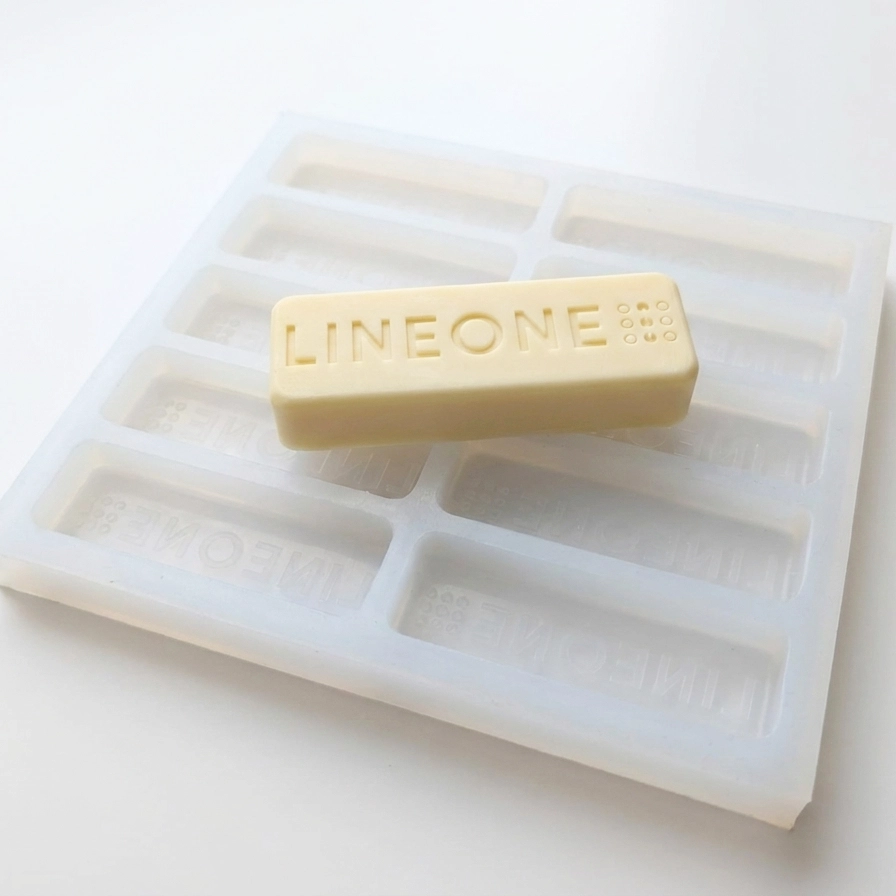
Print Lines:
One of the questions we’re asked most often is why some silicone molds show small lines or 3D printing marks.
To understand why, we first need to know how a mold is made.
The silicone we use to make molds is a viscous material that is mixed with a catalyst or hardener. Once prepared, it is poured over the original model we want to reproduce.
Because it is nearly liquid before it cures, the silicone flows into every tiny detail of the surface. And this is where one of its greatest advantages lies… but also one of its drawbacks:
Silicone copies absolutely everything.
It reproduces the logo, textures, and finest details, but also any imperfections, scratches, or print lines on the original model.
That’s why, to create a high-quality mold, we need to start with an almost perfect model. modelo prácticamente perfecto.
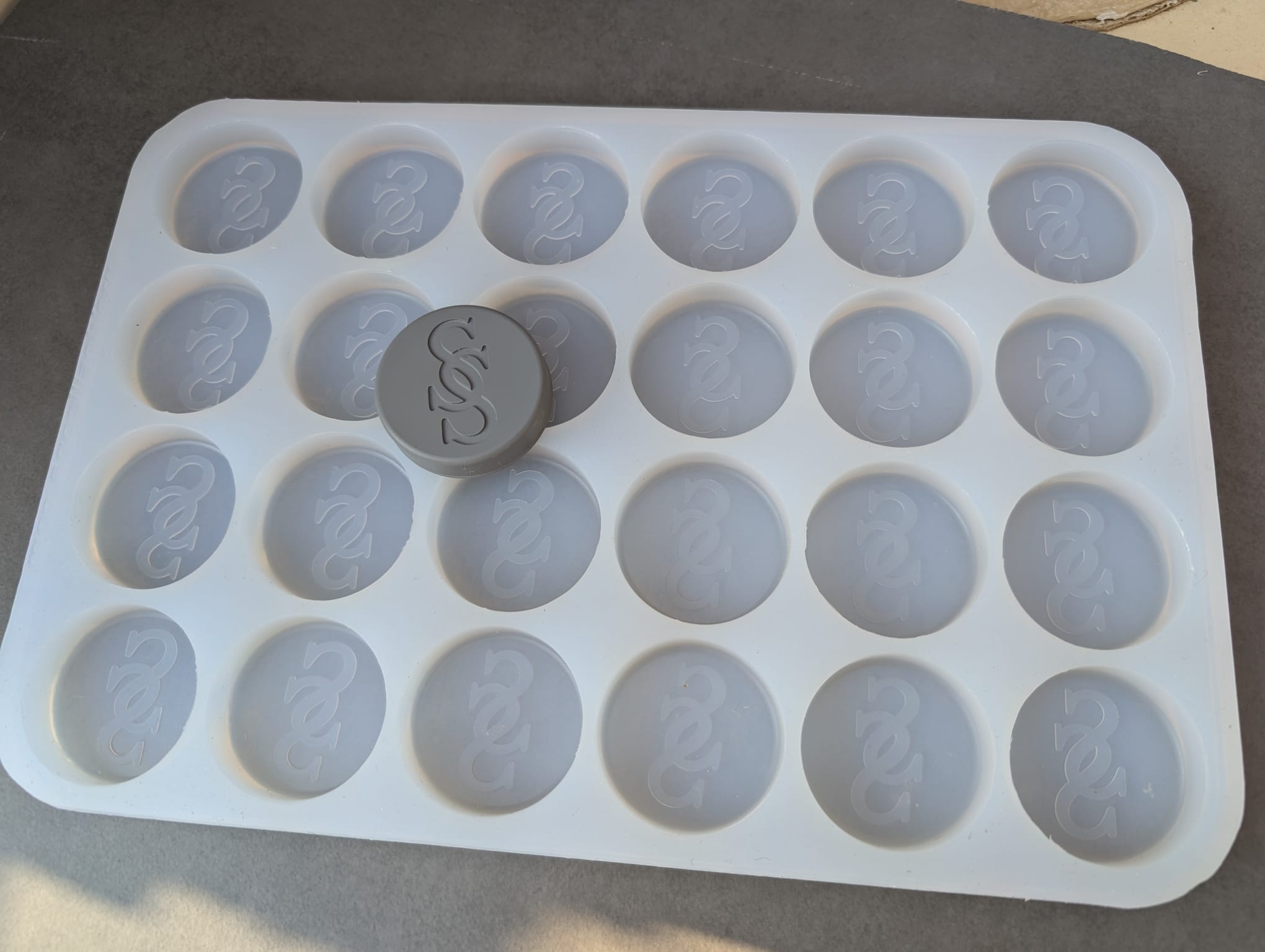
3D Print Quality Is Essential
Master models can be made using filament or resin 3D printing, but not all printers deliver the same results.
What really matters is the quality of the printer, its resolution, and the printing settings used..
High-resolution 3D printing greatly reduces visible layer lines and produces much cleaner, more defined surfaces. The better the original model, the better every piece produced from the mold will be.
But for us, 3D printing is only the beginning.
Hand Finishing Makes All the Difference
At MoldeSilicona, we take great care with every master model before making the mold.
Once printed, we carefully inspect, refine, and sand it as needed. We also apply primer and use various finishing techniques to smooth out any print marks and achieve the cleanest possible surface.
This process requires particular precision for models featuring logos, text, or small details: we want to remove unwanted marks without sacrificing the definition of the design.
Once all the models are finished, they are carefully aligned and the master pattern is prepared so that the silicone can later be poured over it.
Only then does the mold-making process begin.
A Good Model Makes a Good Mold Possible
Un molde de silicona profesional comienza mucho antes de mezclar la silicona.
It starts with a good idea, a well-designed CAD model, high-resolution 3D printing, and, above all, the time devoted to finishing the master model.
Every tiny detail of that model will be reproduced in the mold—and will then appear again and again in every chocolate, bar of soap, candle, resin piece, or other product our customer makes.
That’s why we pay special attention to this part of the process.
Our goal is not simply to make a mold, but to deliver a production tool capable of creating many reproductions with a clean, consistent, and professional finish..